
About Dave Power
I’m Dave Power, owner and guide at Irish Bass Guide, specialising in shore-based lure fishing for bass along the South Wexford coast of Ireland.
I started fishing at the age of four on the coasts of Dublin and Wicklow and I’ve been an angler for over 39 years now. I've fished for plenty of different species over that time, both freshwater and saltwater, but bass and lure fishing have become the main obsession.
And it probably is an obsession.
I spend a huge amount of time trying to understand what makes bass move and feed. Tides, water movement, wind, swell, clarity, structure, baitfish, time of year. None of those things work in isolation and that's a big part of what keeps bass fishing interesting for me.
Through Irish Bass Guide I get to put that experience to use helping other anglers with their own fishing. Catching fish obviously matters, that's why we're there. But I want people to leave a session understanding more about why we fished where we did, why we used a particular lure or approach, and what they can take away and use when they're fishing without me.
A Lifetime on the Water
My fishing started very young. I was four when I began fishing the coasts of Dublin and Wicklow and by five I was learning to fly fish for trout.
Later I spent around ten years living in the Irish midlands where most of my fishing was fly fishing for trout. Eventually I found my way back to the sea and bass became the species that really took over.
That background still influences how I fish today.
I've never been particularly interested in simply finding something that works and repeating it forever. I want to know why it worked. What changed when it stopped working. Why fish were there yesterday and aren't there today.
Bass are very good at making sure you never completely figure that out.
How I Approach Bass Fishing
My fishing is shore-based and covers very different types of water, from estuaries and shallow ground to rocky open coast.
The lure is only one part of it.
Understanding the tide and how water is moving around a particular piece of ground can be far more important than what's clipped onto the end of the line. The same goes for wind and swell, water clarity, available bait and the stage of the tide. Even a mark that produced really well a few days earlier can be completely wrong when those conditions change.
That's the side of bass fishing I particularly enjoy, and it's a big part of how I guide.
I don't want somebody standing beside me waiting to be told where to cast for six hours. I'll explain what I'm seeing, what I'm looking for and why we're making the decisions we're making. Sometimes that means changing lures. Sometimes it means moving. Sometimes it means recognising that what looks like perfect water actually isn't.
That's fishing.
Lures, Tackle and Industry Relationships
I've developed good relationships with people and brands within bass fishing, including Pirate Lures and Samson Fishing.
I've used Pirate Lures soft plastics extensively in Irish coastal conditions and have been involved in testing and providing practical feedback on their lures. The Teaser in particular has become a lure I have a huge amount of confidence in and one I've spent a lot of time learning how to get the best from.
I've also fished Samson Fishing lures extensively, both hard and soft, across everything from estuaries and shallow ground to much rougher open-coast conditions.
But I'm not interested in recommending something just because there's a brand name attached to it.
If I talk about a lure, rod, reel or another piece of equipment through Irish Bass Guide, I want that opinion to come from actually using it. What it does well, where I think it fits and, where it doesn't.
Guiding and Coaching
I work with anglers at very different stages.
Some have never lure fished for bass before. Others already catch bass regularly and want to get better at reading conditions, choosing ground or developing a particular part of their fishing. The approach changes depending on who's standing beside me.
For a beginner that might start with casting, lure control and recognising the sort of water we're trying to fish.
With a more experienced angler we might spend far more time talking about water movement, lure presentation, how fish are using a particular feature or why we're choosing one area over another.
Either way, I want people involved in the decisions.
There's a big difference between catching a bass because somebody told you exactly where to cast and beginning to understand how to find that fish yourself.
Irish Bass Guide
Irish Bass Guide grew naturally out of all of that.
It's a professional guiding service, but I don't want it to become a conveyor belt where success is measured purely by the number of fish photographed at the end of the day. Bass don't work like that anyway.
I want to give people the best opportunity I can to catch them, of course. But I also want someone to come away a better angler than when they arrived.
If they find themselves standing on another shoreline six months later, looking at the water differently because of something we worked through together, then I've done my job.
And I'm still learning too.
I don't think that part ever stops.
For Dave Power, bass fishing is more than just a pastime — it’s a pursuit of knowledge, connection, and the thrill of helping others succeed.
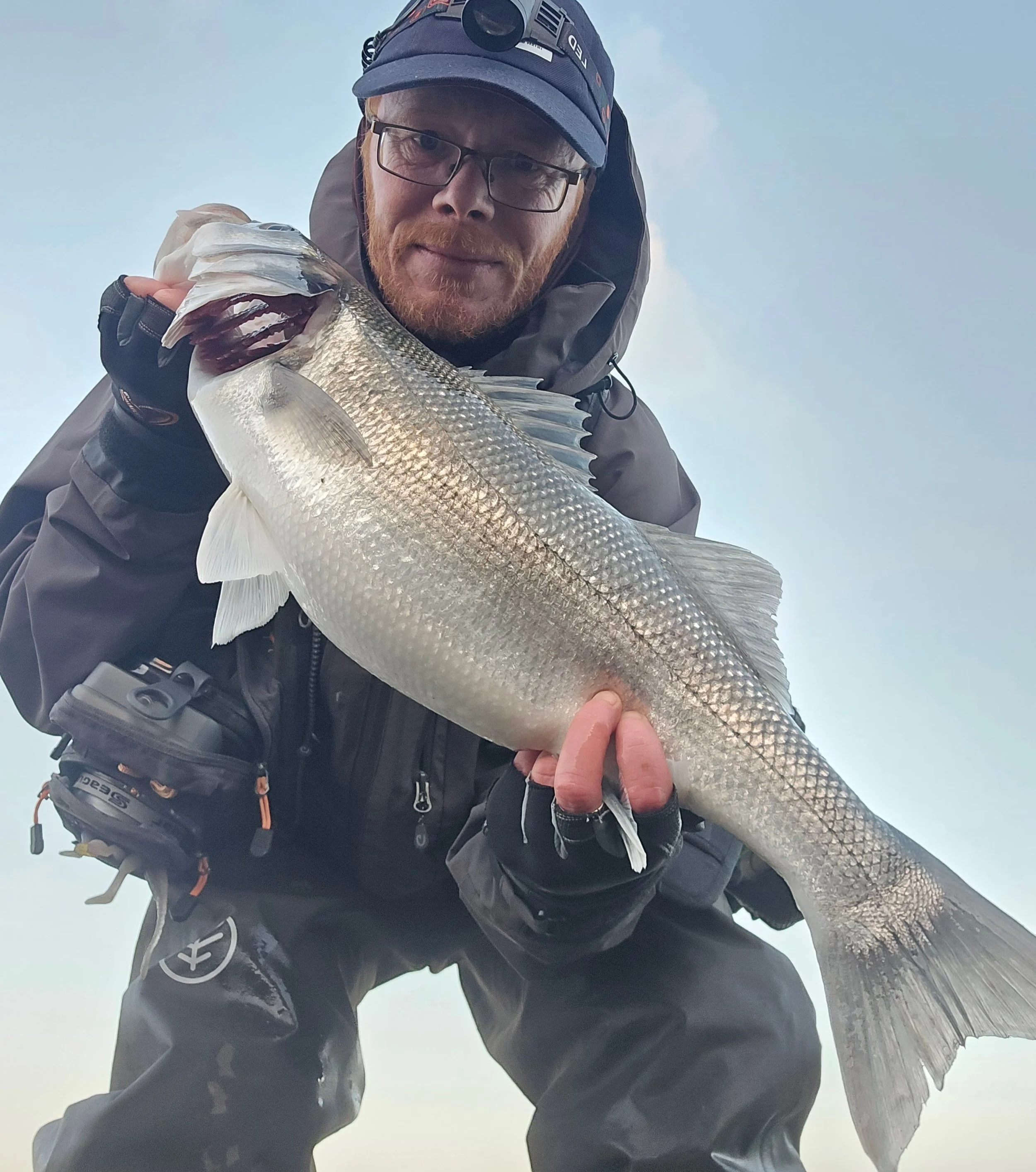
“Watercraft catches fish, it’s not this lure or that lure. It’s knowing how to read the water, knowing where the fish will be and when - then it’s the lure and presentation.”